




Why Was HITRUST Created? Understanding the Meaning Behind the Framework

December 18, 2025


 Ensure financial data security for clients and partners.
 Save you time and money by ensuring you're fully prepared for your SOC 2 audit.
 Prove to your customers & vendors that you handle their data securely.
 Prove your commitment to cybersecurity and assure customers their data is secure.
 Demonstrate commitment to security through the service organization’s controls.
 Build a secure and transparent supply chain by complying with SOC standards.
 Strengthen operational resilience from cyber threats.
 Protect customer data, reduce the risk of penalties and safeguard your reputation.
 Enhance security, reduce risk, and increase trust with stakeholders.
 Improve financial transparency, reduce accounting fraud, and enhance investor confidence.
 Future proof your business by Identifying, assessing, and mitigating AI-related risks.
 Identify network vulnerabilities and entry points that attackers could exploit.
 Gain access to government contracts by proving you're serious about security.
 Identify vulnerabilities and entry points in the cloud that attackers could exploit.
 Identify vulnerabilities with your human team that hackers could manipulate and exploit.
 Identify, analyze and evaluate potential risks to your organization data security.
 Validate your company's cloud-specific security controls and demonstrate a commitment to data security.Future proof your business by Identifying, assessing, and mitigating AI-related risks.
 Establish and advance your organization’s AI Management System to ensure secure and responsible AI governance.
 Demonstrate your commitment to innovation through the adoption of secure, responsible, and ethical Al practices.Prove to your customers & vendors that you handle their data securely.
 Protect sensitive data by enhancing cybersecurity and reducing risk.Gain access to government contracts by proving you're serious about security.Enhance security, reduce risk, and increase trust with stakeholders.
 Protect sensitive information from hackers and security threats, ensuring your data stays safe.
 Checkout our latest blogs on compliance frameworks and security.
 Checkout our FREE tools to learn more about managing compliance.
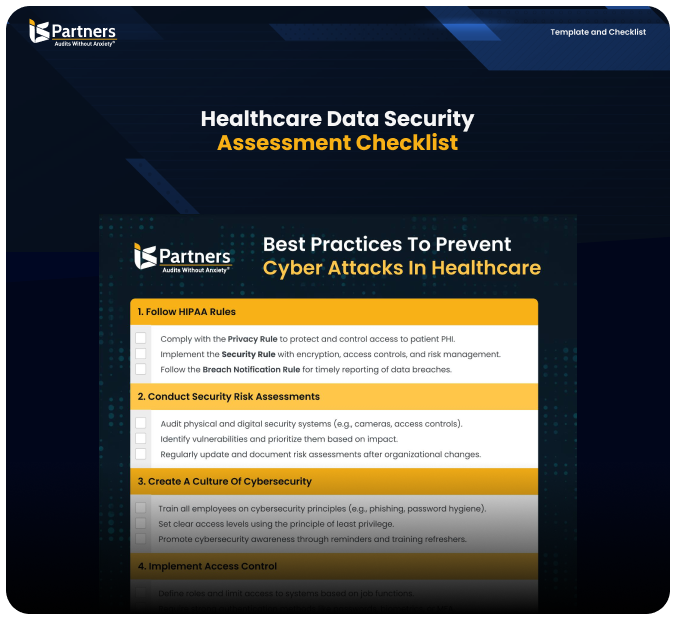
 Learn about how Checklists & Templates for compliance programs.
 Join us for events to stay informed and ahead in compliance.
 Everything you need to know about compliance frameworks in one place.
 Join 10,000 others who receive our award-winning content in their inbox each month.
 HITRUST AI RM Knowledge Hub / Implementation of HITRUST AI RMF / Assessment of Organizational Maturity
 The AI maturity assessment for your organization is designed to help you understand your current capabilities, identify gaps, and map out a clear path forward.
The AI Maturity Assessment is a tool designed to help you understand how well your organization is managing AI risks and to identify areas for improvement.
It gives you a clear picture of your current practices by comparing them against globally recognized standards like NIST AI RMF and ISO/IEC 23894 and then shows you a roadmap for getting even stronger.
Define Your Scope. It starts by outlining which AI systems, processes, and risks are included in the assessment, ensuring you know exactly what’s being evaluated.
Evaluate Key Areas:
The assessment looks at four main aspects:
Assess Control Maturity. This measure measures how well your current practices perform against each criterion, identifying strengths and pinpointing gaps.
Actionable Insights. You receive a detailed report highlighting your overall AI risk maturity and offering recommendations for improvement, giving you a clear path to enhance your AI governance.
Achieving AI maturity requires cross-functional alignment and continuous learning. Here are the key factors that influence a company’s AI maturity:

Fill out the form to schedule a free, 30-minute consultation with a senior-level compliance expert today!
Benefit from:

Great companies think alike.
Join hundreds of other companies that trust IS Partners for their compliance, attestation and security needs.